JOIN US FOR AN EDUCATIONAL HEALTH SEMINAR ON CANNABINOID'S EFFECTS ON HOMEOSTASIS and DISEASE |
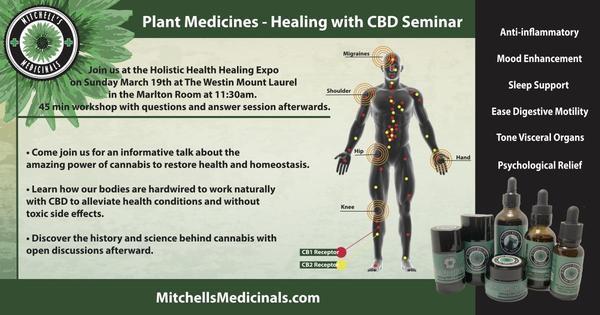
-Come join us at the Holistic Health and Healing Expo
on March 19th at the Westin in Mount Laurel New Jersey and on April 2nd at the Inn at Villanova, Pennsylvania -The Holistic Health and Healing Expo will feature 100's of alternative and holistic
based businesses to expand your knowledge and understanding of human health. Check out HHH Expo here: https://mtlaurel.hhhexpo.com/ -We are proud to be a part of the Expo to offer our
products and discuss the health benefits of CBD -Mitchell will be speaking about how to boost your body's resilience to stressors by optimizing your Endocannabinoid System (ECS) through
supplementation, diet and lifestyle -The seminar will dive into the history, science and medical applications of cannabis/hemp and cut through the hype and misinformation about CBD.
-Our Endocannabinoid System is a homeostatic regulator that helps our bodies adjust to stressors and helps keep us in a state of balance. Getting your Endocannabinoid System (ECS) to work
efficiently could be the missing link to your chronic health conditions and could help alleviate pain, sleep disturbances, anxiety, gut health issues and many more. Click the links below
to reserve your spot |
How your diet could be effecting your Endocannabinoid System and your overall health |
The endocannabinoid system (ECS) is a complex network of receptors, enzymes, and endocannabinoids that play a crucial role in regulating various physiological
processes, such as mood, appetite, pain sensation, and inflammation. Recent studies have shown that diet can significantly affect the ECS and its functioning. In this article, we will explore the link between diet and the endocannabinoid system and how you can optimize your diet to improve ECS function.
The Role of the Endocannabinoid System in the Body
The endocannabinoid system is involved in regulating several physiological processes in the body. It consists
of two main receptors, CB1 and CB2, that are found in different parts of the body, including the brain, central nervous system, immune system, and peripheral tissues. The CB1 receptors are predominantly found in the brain and are involved in regulating mood, appetite, and pain sensation. The CB2 receptors are mainly located in the immune system and are involved in modulating inflammation and pain.
Endocannabinoids, which are produced by the body, bind to these receptors to activate them and initiate a
cascade of physiological responses. The ECS is also influenced by external factors such as diet, exercise, and stress.
Diet and the Endocannabinoid System
Dietary factors can affect the ECS in multiple ways. For instance, the consumption of certain nutrients, such
as omega-3 fatty acids and antioxidants, can improve ECS function. On the other hand, a diet high in carbohydrates and sugars can impair ECS function.
Omega-3 Fatty Acids
Omega-3 fatty acids, which are found in fatty fish, flaxseed, and walnuts, are known to have anti-inflammatory properties. Studies have shown that omega-3 fatty
acids can increase the production of endocannabinoids and enhance the activity of the CB1 and CB2 receptors. This, in turn, can improve mood, reduce inflammation, and alleviate pain.
Antioxidants
Antioxidants, such as those found in fruits and vegetables, can also improve ECS function. These compounds protect the body from oxidative stress, which can damage
cells and impair physiological processes. By reducing oxidative stress, antioxidants can improve the activity of the CB1 and CB2 receptors and increase the production of endocannabinoids.
Carbohydrates and Sugars
A diet high in carbs and sugars can impair ECS function. Studies have shown that consuming a high carb diet can
alter expression of CB1 receptors in the brain, leading to a decrease in endocannabinoid signaling. High sugar and carbohydrates can impair the production of endocannabinoids and reduce the activity of the CB1 receptors.
How to Optimize Your Diet for the Endocannabinoid System
To optimize your diet for the endocannabinoid system, it is essential to focus on nutrient-dense foods that are
rich in omega-3 fatty acids and antioxidants. Here are some tips to get you started:
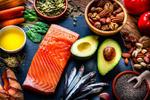
- Eat fatty fish, such as salmon, mackerel, and sardines, at least twice a week to increase your intake of omega-3 fatty acids.
- Incorporate plant-based sources of omega-3 fatty acids, such as flaxseed, chia seeds, and walnuts, into your
diet.
- Eat a variety of fruits and vegetables to
increase your intake of antioxidants.
- Limit your
consumption of sugars by avoiding processed foods and sugary drinks.
- Consider supplementing your diet with omega-3 fatty acid and antioxidant supplements and CBD.
Conclusion
The endocannabinoid system is a complex network of receptors, enzymes, and endocannabinoids that play a crucial
role in regulating various physiological processes in the body. Diet can significantly affect the ECS, with certain nutrients improving its function.
To your health, Mitchell
|
|
Read More
|
|
|
|
|
|
|
|
|